
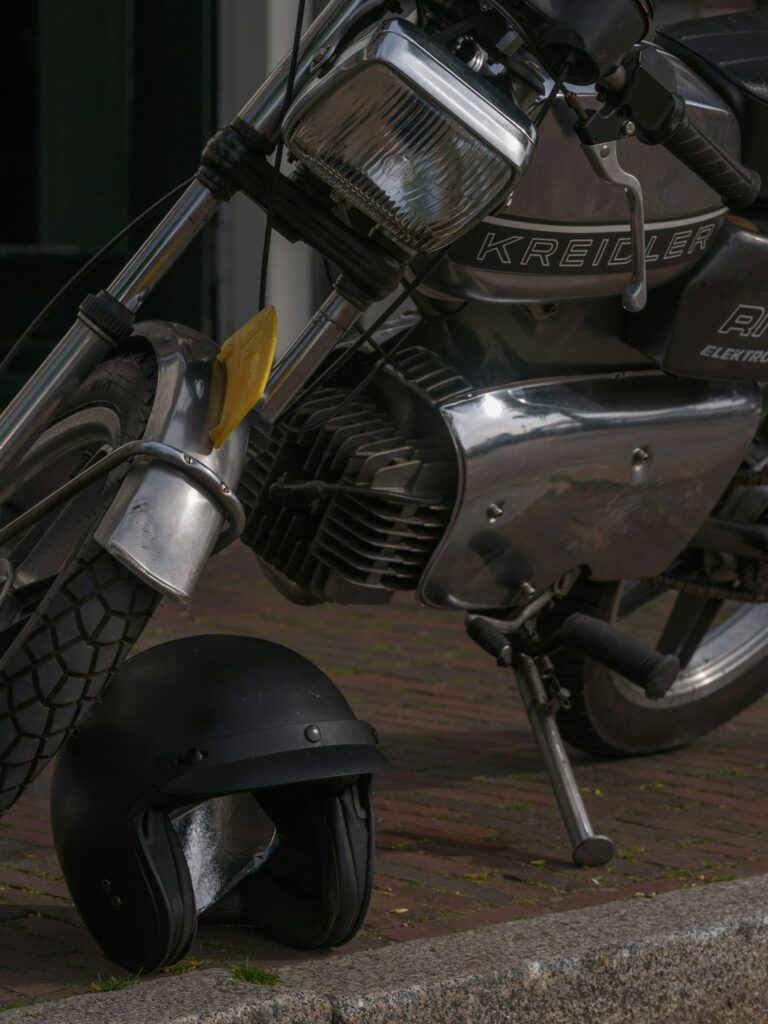
Do motorcycles and scooters need insurance in Tennessee?
Yes, most motorcycles and gas-powered scooters operated on public roads in Lenoir City, TN need liability insurance or another legally accepted form of financial responsibility.
Tennessee requires vehicles with regular motorcycle license plates to meet minimum financial responsibility requirements. The minimum liability limits are:
- $25,000 for injury or death to one person
- $50,000 for injuries or deaths in one accident
- $25,000 for damage to another person’s property
These limits are often written as 25/50/25. They pay for certain injuries or property damage caused to others when the insured rider is legally responsible. They do not automatically pay to repair the rider’s motorcycle or scooter.
Tennessee also uses electronic insurance verification. If an actively registered vehicle does not appear to have the required coverage, the owner may receive a notice and could face fines or registration suspension.
Is scooter insurance required, or only motorcycle insurance?
The answer depends on the type of scooter.
A gas-powered scooter that must be registered and operated on public roads generally falls under Tennessee’s motorcycle or motor-driven-cycle rules. Insurance may be required even if the scooter has a small engine and is mainly used for short trips.
Tennessee classifies many scooters according to engine size and design. A scooter between 51 and 125 cubic centimeters may require a limited motorcycle license, while larger motorcycles and scooters generally require a Class M motorcycle license or an appropriate motorcycle designation. A regular driver license may be enough for certain motorized bicycles with engines of 50cc or less, but licensing and insurance are separate issues.
Electric bicycles, low-speed electric scooters, mobility devices, and other small electric vehicles may be treated differently. Their status can depend on factors such as speed, motor output, design, and whether the vehicle is registered. A small rental scooter is not necessarily treated the same way as a privately owned, road-registered scooter.
The safest approach is to identify the vehicle’s exact classification before assuming that a standard auto policy, homeowner policy, or no policy is sufficient.
Does a regular car insurance policy cover a motorcycle?
Usually, no. A personal auto policy may cover a car, but motorcycles and scooters commonly require separate coverage or a specific endorsement.
Even if a household has a car insurance policy, that policy may not provide liability coverage for a motorcycle, moped, or scooter. It may also exclude physical damage, passenger injuries, custom parts, safety equipment, or use of a vehicle that is not listed on the policy.
Insurance coverage follows the policy language, not simply the fact that the same person owns both vehicles. A motorcycle should be specifically identified on the applicable policy, including its vehicle identification number when required.
A broad personal liability policy also may not satisfy Tennessee’s vehicle insurance requirement if it is not connected to the registered vehicle. The state’s insurance verification system generally expects coverage to be associated with the vehicle’s identification information.
What does motorcycle or scooter insurance typically cover?
A motorcycle policy can include several different types of protection. Required liability coverage is only the starting point.
Common coverage categories include:
- Bodily injury liability: Helps pay for injuries caused to another person in a crash.
- Property damage liability: Helps pay for damage to another person’s vehicle, fence, building, or other property.
- Collision coverage: Helps pay for damage to the insured motorcycle or scooter after a collision, subject to the deductible.
- Comprehensive coverage: May cover theft, vandalism, falling objects, fire, flooding, and certain weather-related losses.
- Uninsured or underinsured motorist coverage: May help when an at-fault driver has no insurance or not enough insurance.
- Medical payments coverage: May help with certain medical expenses for the rider or passenger, depending on the policy.
- Accessory or custom-parts coverage: May be relevant for added storage, upgraded equipment, custom paint, communication systems, or other modifications.
Coverage for helmets and riding gear varies. Some policies include limited protection for safety equipment, while others do not. Expensive accessories should not be assumed to be covered simply because they are attached to the motorcycle.
Is minimum liability coverage enough?
Minimum coverage may satisfy Tennessee’s legal requirement, but it may not be enough to protect a rider’s finances.
A serious motorcycle crash can produce medical bills, lost income, vehicle damage, and claims involving more than one person. The state minimum property-damage limit could also be inadequate if a collision damages a newer vehicle or causes damage to a structure.
Higher liability limits may be worth considering for riders with savings, home equity, business assets, or other property that could be exposed after a serious at-fault accident. Uninsured and underinsured motorist coverage can also be significant because a rider may suffer severe injuries even when the other driver has little or no insurance.

Coverage decisions should reflect the vehicle’s value, how often it is ridden, whether passengers are carried, and the rider’s financial exposure.
What about a motorcycle or scooter that is financed?
A lender may require more than Tennessee’s minimum liability coverage.
When a motorcycle or scooter is financed, the lender commonly requires collision and comprehensive coverage to protect its financial interest in the vehicle. The lender may also require specific deductibles and be listed on the policy.
This requirement continues even if the owner would personally be willing to pay for repairs after a loss. Cancelling required physical-damage coverage could violate the loan agreement and leave the owner responsible for both the remaining loan balance and a damaged or stolen vehicle.
Does storing the vehicle for winter eliminate the insurance requirement?
Not automatically.
A motorcycle or scooter that remains registered may still need the required liability coverage, even if it is parked in a garage during colder months. Cancelling coverage can create a gap that affects registration, future claims, or lender requirements.
Seasonal riding patterns are common in the area. Weather changes, wet pavement, leaves, gravel, and sudden temperature shifts can affect traction and visibility. A vehicle that is used only occasionally still presents liability risks when it is ridden on public roads.
Before reducing or suspending coverage, the owner should understand how the change affects registration and whether the vehicle is still considered actively registered.
Does homeowner or renter insurance cover a scooter?
Homeowner or renter insurance generally does not replace road-use motorcycle insurance.
A home policy may provide limited coverage for personal property in certain situations, but motorcycles and motorized vehicles often have specific exclusions. It may not cover liability arising from riding the vehicle on public roads, and it may not pay for theft or damage in the way the owner expects.
A garage, shed, or driveway also does not change the vehicle’s road-use insurance requirements. Storage location and vehicle classification are separate questions.
What should riders verify before using the vehicle?
Before riding, check four basic issues:
- The vehicle is properly titled and registered when required.
- The rider has the correct Tennessee license or designation.
- The policy specifically lists the motorcycle or scooter.
- The liability limits and optional coverages match the rider’s actual risks.
It is also useful to confirm whether passengers are covered, whether occasional business use is excluded, and whether borrowed or rented vehicles receive any protection. A policy designed for one type of motorcycle may not automatically cover a different scooter or another person’s vehicle.
For residents using two-wheeled vehicles on roads around the community, insurance is not only a registration requirement. It is the financial protection that stands between a routine ride and potentially significant personal costs after a crash, theft, or weather-related loss.
